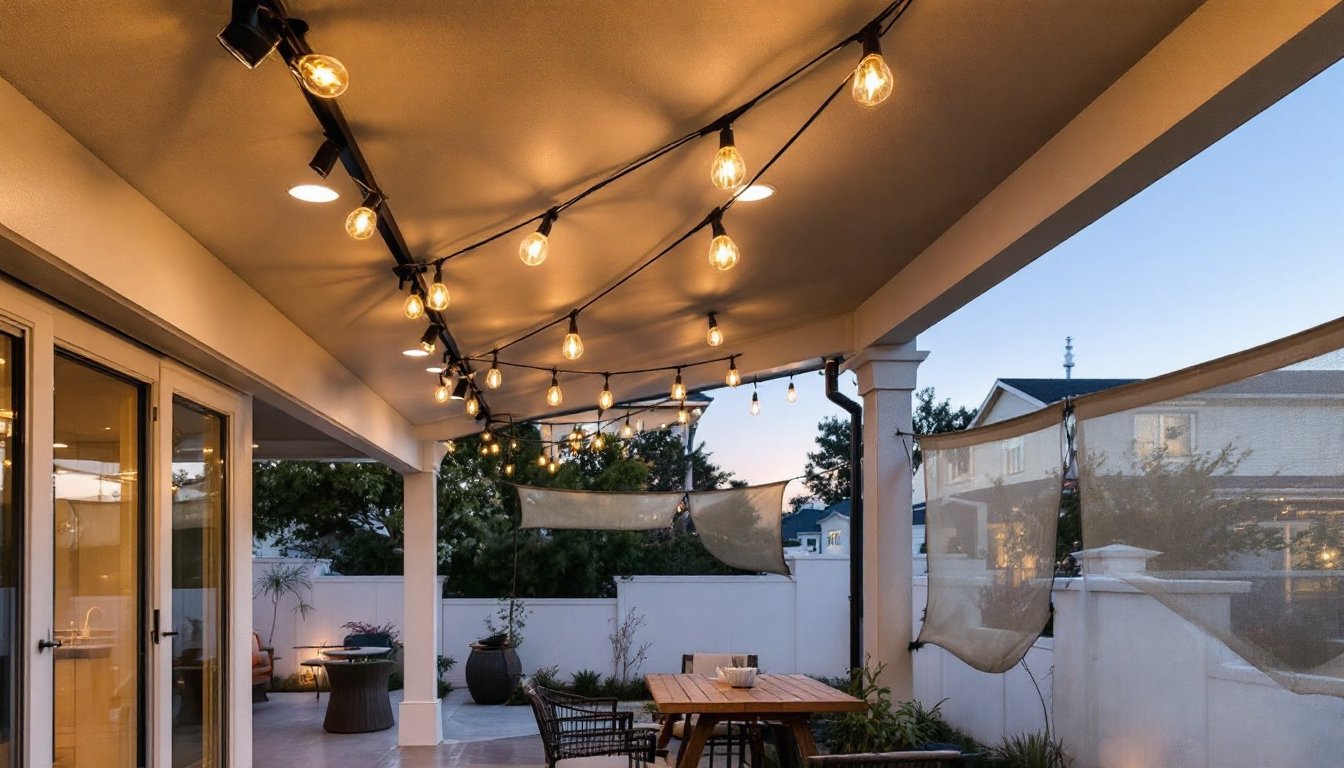
Outdoor lighting transforms a covered patio from a dark afterthought into a functional, inviting space where your family actually wants to spend evenings. The right ceiling patio lighting sets the mood, extends usable hours, and adds real value to your home, but choosing between recessed fixtures, strings, tracks, and smart systems can feel overwhelming. This guide walks you through seven practical ceiling patio lighting ideas, each with specific installation tips, realistic difficulty levels, and honest cost considerations. Whether you’re starting from scratch or upgrading an existing setup, you’ll find options that fit your skill level, budget, and aesthetic.
Table of Contents
ToggleKey Takeaways
- Recessed downlights deliver a clean, modern look with even illumination when spaced 4 to 6 feet apart, though installation requires intermediate-to-advanced DIY skills or professional electrician work.
- String lights with warm Edison bulbs (2700K) provide the quickest, most affordable ceiling patio lighting upgrade for renters and those avoiding permanent wiring, with costs as low as $40–$80.
- Track lighting offers flexible, adjustable brightness to highlight different zones on your patio and costs $300–$800 for materials plus professional installation, less expensive than a full recessed grid.
- Solar-powered ceiling lights eliminate wiring and permits but deliver ambient mood lighting rather than primary illumination—they work best as supplementary fixtures in sunny climates.
- Flush and semi-flush fixtures suit patios with low ceilings under 8 feet and are easier to install if a ceiling box already exists, though they require hardwiring from a licensed electrician if none is present.
- Smart ceiling patio lighting systems enable voice control, automated dimming, and motion-triggered operation starting at $75–$120 for a starter kit, making them ideal for homeowners with existing smart home ecosystems.
Recessed Lighting for a Clean, Modern Look
Recessed downlights (also called pot lights or can lights) sit flush with the ceiling, creating a sleek, clutter-free appearance that works with nearly any design style. They’re ideal if you want your patio ceiling to feel modern and minimal, the fixtures themselves almost disappear.
What makes them work: Recessed lights provide even, unobstructed illumination across the patio. A typical 4-inch or 6-inch recessed fixture works well: aim for spacing roughly 4 to 6 feet apart for balanced coverage without dark spots. For a 12-foot by 16-foot patio, you’d typically install 8 to 12 fixtures depending on how bright you want it.
Installation reality: This is intermediate-to-advanced DIY work if your patio ceiling is already framed and has attic access above. You’ll need to cut holes in drywall or soffit, run 14/2 or 12/2 electrical wire through the joists (follow NEC code for your area), and install the junction box and fixture housing. If you don’t have attic access or the patio ceiling is a soffit with no space above, hire a licensed electrician, the cost of running new circuits or fishing wire through tight spots justifies professional labor.
Materials and tools: Hole saw, drywall saw, wire strippers, voltage tester, wire connectors, and recessed housing kits. LED-rated fixtures last much longer than incandescent and run cooler, making them safer in tight spaces.
Permit note: Most jurisdictions require a permit for new electrical work. Always pull one, it’s not bureaucratic hassle: it ensures your work is inspected and safe.
String Lights and Edison Bulbs for Ambient Warmth
String lights hung in zigzag or parallel lines are the quickest, least invasive ceiling patio lighting upgrade. They deliver ambiance without permanent wiring, making them perfect for rentals or anyone hesitant about hardwiring fixtures.
Why they work: Warm-white Edison bulbs (2700K color temperature) create cozy, inviting glow. Café-style strands strung overhead feel intentional and designed, not like an afterthought. They’re also forgiving, uneven spacing or slightly sagging lines read as charming rather than sloppy.
Setup and installation: Attach screw-in eye bolts or cable clips to the patio ceiling’s framing (look for joists or the soffit structure). Most DIYers can run cable and hang string lights in an afternoon. Use outdoor-rated string lights, look for weatherproof sockets and UV-resistant cable. Plug them into an outdoor receptacle or a GFI-protected extension cord rated for wet locations.
Spacing and layout: Strings work best spaced 6 to 8 feet apart. For a 12-by-16 patio, two or three parallel runs work well: they’re enough to light the space without looking like a fairground. A 50-foot string with Edison or vintage-style filament bulbs costs $40–$80 and creates far more character than typical patio lights.
Maintenance: Check cord insulation yearly, especially in climates with temperature swings. Replace burned-out bulbs promptly to keep the look intentional. A ceiling lighting solution for your home office follows many of the same warm-light principles.
Track Lighting for Flexible, Adjustable Brightness
Track lighting mounts a continuous rail (or rails) to the ceiling, with adjustable fixtures that pivot and rotate. This is your go-to if you want flexibility, spotlight a seating area, highlight a grill, or wash light across dining furniture.
Why track lighting excels: Unlike fixed recessed lights, track heads swivel. If your patio layout changes or you want to emphasize different zones at different times, track lights adapt. They also feel contemporary without being cold or institutional.
Installation approach: Track systems require mounting directly to joists or blocking (check ceiling framing). Most are 120-volt hardwired, similar to recessed lighting, you’ll need to run electrical and install a junction box. Hire an electrician unless you’re experienced with residential wiring. The track itself is typically 2 to 4 feet long modules that connect end-to-end: you can arrange them in lines, L-shapes, or grids.
Design considerations: Space track fixtures 3 to 4 feet apart on the rail. For a medium-sized patio, one 8-foot or two 4-foot tracks provide flexible coverage. LED track heads (15–25 watts each) are energy-efficient and run cool, crucial if the track runs close to the ceiling or any materials that shouldn’t overheat.
Cost reality: Track systems range from $300–$800 for materials plus $200–$500 for professional installation. It’s pricier than string lights but less expensive than a full recessed grid and offers more adjustment.
Dimming option: Many modern tracks support dimmable LED heads, letting you adjust brightness from 10% to 100%, great for movie nights or bright entertaining.
Solar-Powered Options for Energy-Efficient Patios
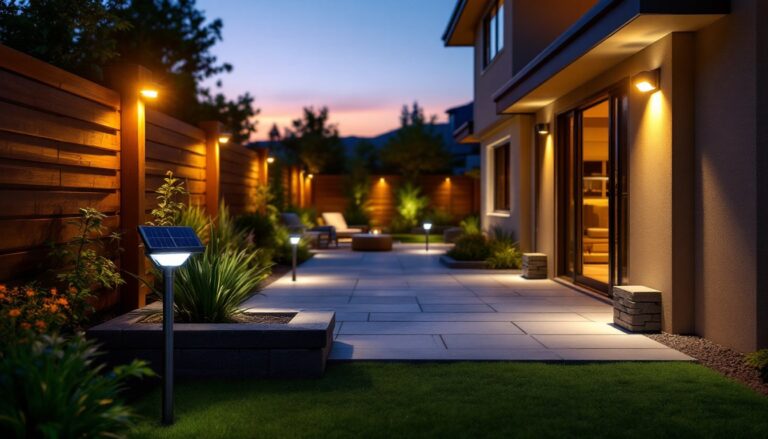
Solar ceiling lights store energy during the day and illuminate at night, no wiring, no electricity bill impact, no permits. They’re ideal for patios where running electrical lines is impractical or expensive.
What to expect: Solar patio lights range from small surface-mount fixtures to larger panels. Expect warm-white LEDs (3000K), moderate brightness (roughly 300–500 lumens per fixture), and 8–10 hours of runtime on a full charge. They work best in climates with consistent daylight: cloudy regions may underperform.
Installation: Most solar fixtures mount directly to the ceiling with stainless steel brackets or adhesive pads. No drilling, no electrical, screw or stick them down and you’re done. That said, mounting on a patio ceiling means the solar panel is shaded by the structure itself, which limits charging. The workaround: Mount the solar panel on a nearby fence, railing, or pole where it catches morning or afternoon sun, then run a low-voltage wire to ceiling-mounted lights.
Real-world limitations: Solar-powered ceiling lights don’t produce the brightness of hardwired fixtures. They’re excellent for ambient, mood lighting or secondary zones but won’t adequately light a dining area where you’re reading menus. Plan them as supplementary rather than primary lighting.
Maintenance: Clean solar panels monthly with a soft, dry cloth. In winter or extended cloud cover, battery performance drops. Most solar fixtures use rechargeable NiMH batteries: replace them every 2–3 years ($10–$25 per fixture).
Cost advantage: A 4-pack of solar ceiling lights runs $60–$120, making them budget-friendly compared to hardwired alternatives. If you modern home decor inspiration sites, you’ll see solar fixtures increasingly integrated into outdoor design.
Flush Mount and Semi-Flush Fixtures for Low Clearance Areas
Flush mounts attach directly to the ceiling with minimal gap, while semi-flush fixtures hang 4–8 inches below. Both work brilliantly on covered patios with lower ceilings (8 feet or less) where recessed lights or pendant fixtures won’t fit.
Design and function: Flush and semi-flush fixtures come in countless styles, from minimalist geometric designs to rustic farmhouse. Choose outdoor-rated fixtures rated for damp or wet locations (check the UL label). Chandelier-style or lantern-style fixtures add character: dome or disk fixtures give clean, modern appeal.
Installation: These are hardwired, requiring a standard electrical box mounted to the ceiling and an electrical connection. Difficulty depends on whether you already have a ceiling box. If a light already exists in that spot, it’s moderate DIY, disconnect the old fixture, install the new one’s housing, wire it (black to black, white to white, ground to ground), and secure the trim ring. If no box exists, you’ll need to run new electrical from a breaker panel, which is electrician work.
Brightness and coverage: A single semi-flush fixture (typically 60–100 watts equivalent LED, or 800–1200 lumens) lights a small patio seating area or dining spot. Larger patios might need two fixtures spaced evenly. Don’t underestimate: test brightness before committing to permanent wiring.
Material durability: Choose fixtures with stainless steel, powder-coated aluminum, or marine-grade finishes to resist rust and weather. Avoid unfinished brass or bare metal unless sealed.
Aesthetic tip: A kitchen lighting setup often influences patio choices, many homeowners repeat a coordinating style. Flush or semi-flush fixtures in a similar finish to your kitchen create visual cohesion between indoor and outdoor spaces.
Smart Lighting Systems for Control and Customization
Smart ceiling patio lights let you control brightness, color temperature, and on/off schedules from your phone or voice assistant. These are increasingly practical and affordable, making them a strong option for new builds or major upgrades.
What’s available: Most systems fall into two camps. Retrofit smart bulbs fit into standard fixtures (recessed, flush, or track heads) and connect via WiFi or Bluetooth. Integrated smart fixtures come with built-in smart control. Look for systems supporting Alexa, Google Home, or Apple HomeKit for voice control.
Real benefits: Automated dimming at sunset, scheduling lights to turn on before you arrive home, or adjusting color temperature throughout the evening, from bright daylight (5000K) while cooking to warm amber (2700K) for entertaining. Motion sensors trigger lights when someone enters the patio, useful for security and convenience.
Installation: If you’re replacing existing hardwired fixtures, installation is the same as standard fixtures. If you’re using smart bulbs in existing sockets, it’s as simple as screwing in a bulb, the easiest upgrade path. The learning curve is app-based, not electrical.
Reliability and cost: Quality smart systems cost more upfront, a starter kit of 3 smart bulbs runs $75–$120, and a full fixture retrofit may cost $300–$600. But, energy savings from optimized schedules and lower wattage offset costs over time. Ensure your WiFi signal reaches the patio: dead zones cause control delays or dropouts.
Future-proofing: Modern smart systems follow standard protocols (Zigbee, Z-Wave, Matter), so new devices integrate with existing ecosystems. Compare systems for ecosystem compatibility before committing.
For inspiration on outdoor living design, explore resources like Southern Living and Gardenista, which frequently feature smart and integrated outdoor lighting in their projects.
Conclusion
The best ceiling patio lighting combines your lifestyle, budget, and willingness to undertake electrical work. Hardwired options like recessed and track lighting demand professional installation or solid DIY experience but deliver reliable, dimmer-compatible brightness. Quick wins, string lights and solar fixtures, skip the electrical complexity and work beautifully for ambiance. Smart systems add convenience and energy efficiency, especially if you already use smart home tech. Measure your patio, assess ceiling clearance and framing, and honestly evaluate whether you’re comfortable with electrical work or hiring a licensed electrician. A well-lit patio extends your living season and transforms how your family uses the space.