Most people don’t think about lighting until they’re sitting in a dim, uninviting living room, wishing they felt more comfortable. The truth is that warm lighting transforms a space from cold and sterile to genuinely welcoming, the kind of room where you actually want to spend an evening. Whether you’re relaxing with a book, entertaining friends, or just winding down after work, the right warm lighting sets the mood and makes your living room feel like a retreat. This guide walks you through the science and practice of creating that cozy atmosphere, from understanding color temperature to layering different light sources for maximum effect.
Table of Contents
ToggleKey Takeaways
- Warm lighting for living rooms should be in the 2700K to 3000K Kelvin range, with 2700K providing the gold standard for coziness that mimics sunset and fireplace glow.
- Layering multiple light sources—ambient overhead lights, task lighting for activities, and accent lighting for décor—creates a cohesive warm atmosphere far superior to relying on a single fixture.
- Dimmable bulbs and dimmers on ceiling fixtures give you full control to adjust your living room’s warmth throughout the day, from 30% brightness for evening relaxation to 70% when entertaining guests.
- Warm lighting for living room designs reduces stress, promotes conversation, and is psychologically flattering by softening skin tones and making furnishings appear richer than cool, clinical lighting.
- Use consistent Kelvin temperatures across all fixtures and choose warm-white LED bulbs rated 2700K or 3000K on the package label, avoiding anything above 4000K which feels harsh and energizing.
Why Warm Lighting Matters For Your Living Room
Warm lighting does more than just make a room brighter, it affects how you feel in the space. Your eyes and brain respond to color temperature, and warmer tones trigger relaxation by mimicking natural sunset light. This is why living rooms lit with warm bulbs feel more inviting than those with harsh, cool white overhead fixtures.
Psychologically, warm light reduces stress and promotes conversation. It’s the difference between a space that feels like a waiting room and one that feels like home. When you’re redesigning your living room’s lighting scheme, you’re not just installing fixtures, you’re creating an environment that supports the activities happening there: lounging, socializing, reading, or simply decompressing.
Another practical benefit: warm lighting is flattering. It softens skin tones and makes furnishings look richer and more inviting than cool, clinical lighting. That means your living room will actually look better in person than under fluorescent shop lights, which is exactly what you want.
Color Temperature: Understanding Kelvin And What Works Best
Color temperature is measured in Kelvin (K), a scale from cool blue (higher numbers) to warm amber (lower numbers). Understanding this scale is essential for choosing the right bulbs and fixtures.
The Kelvin scale works like this: sunlight at noon is around 5500K (cool and bright). Incandescent bulbs, which most people associate with “warm” light, sit around 2700K (soft and amber). Early morning or late afternoon sunlight, that golden hour, is roughly 3500K. When you’re shopping for bulbs or fixtures, you’ll see these numbers listed on packaging or product specs.
For warm living room lighting, aim for bulbs in the 2700K to 3000K range. At 2700K, the light feels luxurious and deeply cozy, think candlelit dinners or a fireplace glow. At 3000K, you get that warmth while maintaining slightly more visibility, which some people prefer for reading or activities where they need decent task lighting without sacrificing coziness.
Avoid anything above 4000K in a living room unless you’re specifically trying to create a modern, minimalist aesthetic. At 4000K and higher, light starts feeling clinical and energizing, great for kitchens or home offices, but wrong for relaxation.
The Best Kelvin Range For Living Room Comfort
The sweet spot for residential living rooms is 2700K to 3000K, with 2700K being the gold standard for pure coziness. Many homeowners find that LED Home Lighting Fixtures in this range offer the warmth they want with the efficiency modern bulbs provide. If you’re still using older incandescent or halogen fixtures, they naturally fall into this range, which is partly why they feel so comfortable, even if they aren’t energy-efficient.
Dimmable bulbs at 2700K are your best friend. You can turn the light down for maximum coziness during evening relaxation or bring it up slightly when you’re entertaining guests and need better visibility. This flexibility makes warm lighting work across different moods and activities in the same room.
Types Of Warm Lighting Fixtures For Living Rooms
Your living room likely has multiple light sources already, and the key is choosing fixtures that deliver warm light and work together as a system. Let’s break down the main categories and how they fit into your overall scheme.
Overhead Lights And Ceiling Options
Overhead ceiling lights, typically flush mounts, semi-flush fixtures, or chandeliers, are your primary light source but shouldn’t be your only one. A single overhead fixture is often too harsh and can make the room feel less cozy, even if it’s warm-colored.
For coziness, look for fixtures with diffusers or frosted shades that soften the light rather than fixtures with bare bulbs pointing down. A fabric drum shade, frosted glass globe, or etched diffuser spreads light more evenly and warmly. Pendant lights are another solid option for overhead lighting, they deliver warm light while adding visual interest and can be dimmed for better control over brightness levels.
When selecting an overhead fixture, check the wattage and bulb type it accepts. Most modern fixtures use E26 (standard) or E27 (European) screw-in bulbs, which are widely available. Confirm the fixture can accept dimmable bulbs if you want dimming capability, not all fixtures are compatible, and this detail matters for creating that adjustable warm ambiance.
Ceiling color also affects perceived warmth. A white or light gray ceiling reflects light upward and outward, making the room feel brighter. A darker or warmer-toned ceiling (cream, tan, or soft gold) absorbs more light but can enhance the cozy feeling, especially in smaller rooms.
Lamps, Sconces, And Accent Lighting
Floor lamps and table lamps are the MVPs of cozy living rooms. They deliver warm, localized light and are cheaper to install than overhead fixtures. A quality floor lamp with a warm 2700K bulb creates a defined pool of light that feels intimate without lighting the entire room aggressively.
Look for lamps with:
- Opaque or semi-opaque shades that diffuse light softly
- 3-way or dimmable bulbs for brightness control
- Stable bases that won’t tip (important if you have kids or pets)
Wall sconces flanking a sofa or mounted on either side of a fireplace add warmth and depth. They provide task lighting for reading without the glare of overhead fixtures. Sconces are permanent installations that require electrical work, if you’re not comfortable running new wiring, hire an electrician. Most codes require wall sconces to be a specific height and distance from edges, so check local building requirements before installation.
Accent lighting, recessed lights, under-cabinet strips, or decorative uplighting, creates layers. Living Room Home Lighting Design strategies often rely on these subtle sources to build depth and warmth. Picture lights above artwork, small recessed lights highlighting architectural details, or warm LED strips in bookcases all contribute to the overall cozy feel without making the space feel flat or one-dimensional.
String lights or fairy lights can work in modern living rooms if they’re warm-white (2700K). They’re not a primary light source, but they add a playful, inviting touch, especially in spaces with an eclectic or casual design.
Layering Your Lighting For Maximum Coziness
The secret to professional-looking warm lighting is layering. Instead of relying on one overhead fixture, you combine ambient, task, and accent lighting so the room feels warm from every angle.
Ambient lighting is your baseline, the general illumination from overhead fixtures or multiple ceiling lights that make the room functional. This should be warm (2700K–3000K) and ideally dimmable.
Task lighting handles specific activities: reading, playing cards, assignments, or working on a hobby. Desk lamps, floor lamps next to seating, and wall sconces deliver focused warm light where you need it. Task lighting prevents you from cranking the overhead light to full brightness just to see what you’re doing.
Accent lighting highlights architectural features or décor: a painting, a fireplace, floating shelves, or a textured wall. This is where warm uplighting or spotlights add drama and depth. 12 Volt LED Lighting for Home systems often work well for low-voltage accent lighting in living rooms.
A practical setup might look like:
- A dimmed overhead fixture or chandelier (ambient)
- Floor lamps in conversation areas or next to reading chairs (task)
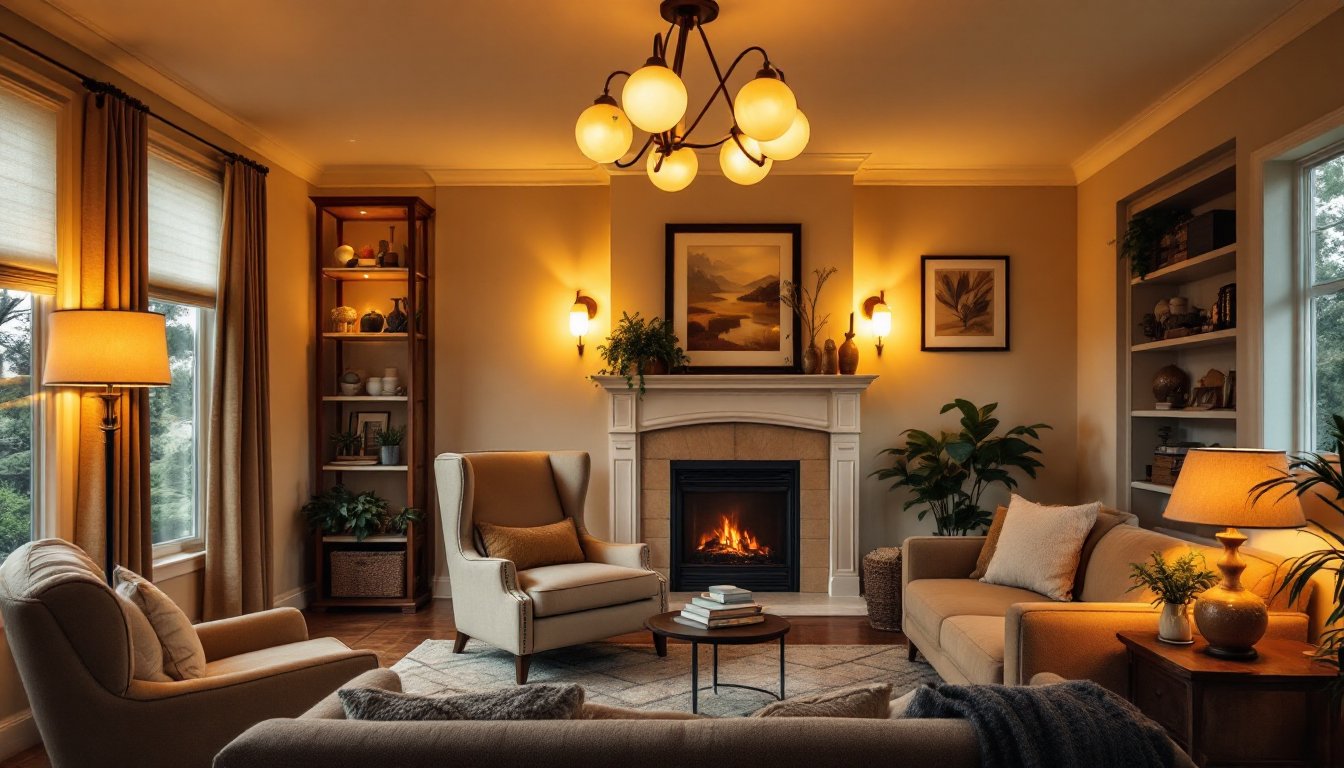
- Wall sconces flanking a focal point like a fireplace (task + accent)
- Recessed lights highlighting artwork or architectural details (accent)
Start with the overhead light at 50% brightness when designing. Then add task and accent lighting one layer at a time, adjusting each for brightness and positioning. The combined effect should feel warm and inviting, with no single fixture overwhelming the others.
Control matters. Install dimmers on ceiling fixtures and choose dimmable bulbs throughout. This lets you adjust the entire room’s warmth depending on the time of day or your mood. Evening relaxation might be 30% brightness across all fixtures, while entertaining guests might push overhead lights to 70% and task lights to full. Design resources like Dwell showcase homes where layered lighting transforms spaces by evening.
Bulb consistency helps too. Use the same Kelvin temperature across all fixtures, either all 2700K or all 3000K. Mixing significantly different color temperatures in the same room creates visual discord and makes the space feel less cohesive.
Finally, think about the color of your bulbs. “Warm white” and “soft white” are marketing terms, but the actual Kelvin rating is what matters. Always check the package: it should clearly state 2700K or 3000K. LED bulbs are efficient and last longer than incandescent, so they’re the practical choice, even if you love the look of vintage filament bulbs, many LED designs mimic that aesthetic now while delivering efficiency.