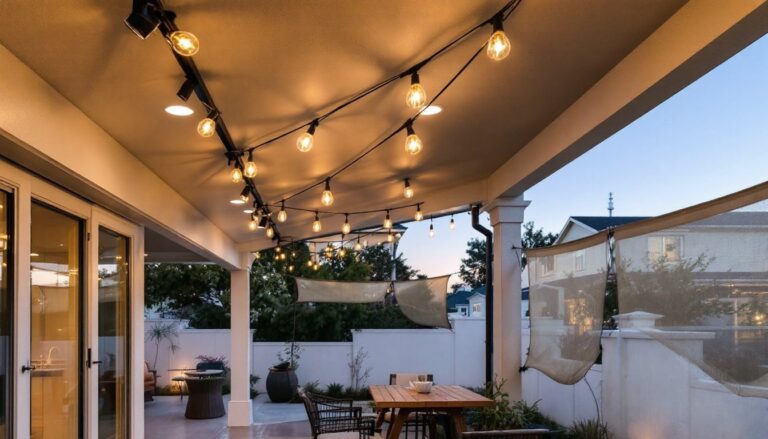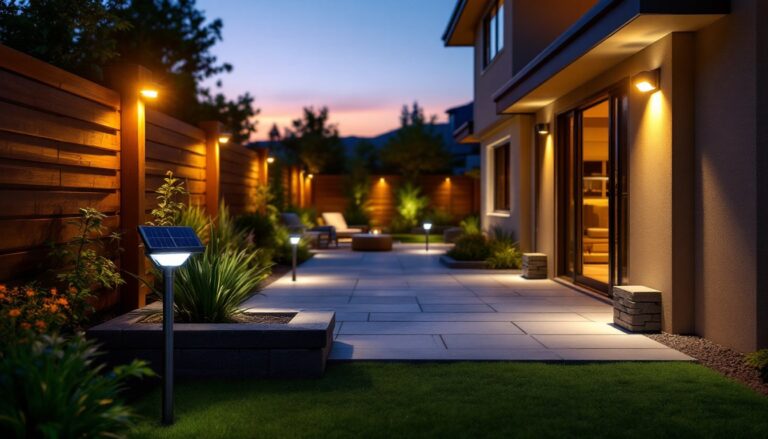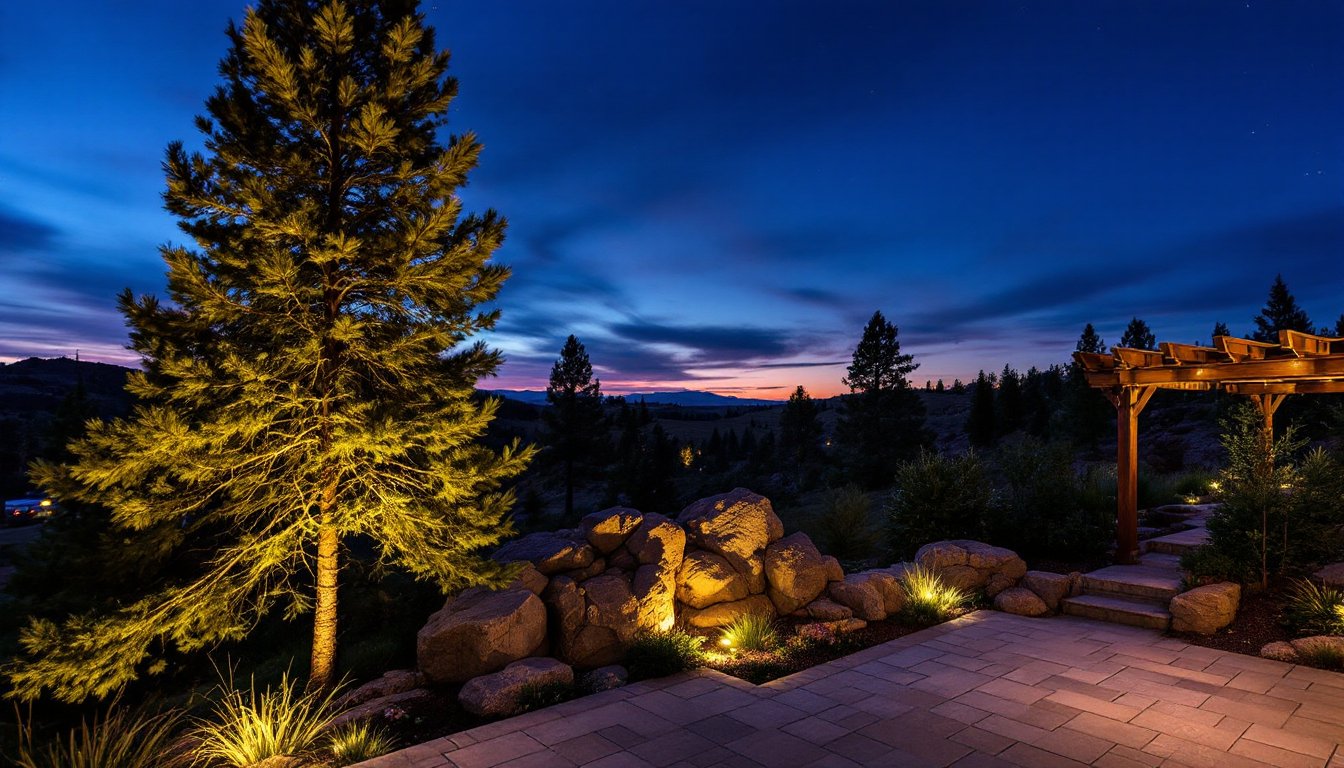
Colorado’s high altitude, intense sun exposure, and dramatic topography create unique challenges, and opportunities, for landscape lighting. Unlike flat, humid climates where standard fixtures work reliably, your Colorado yard demands fixtures built to withstand UV damage, temperature swings from 80°F days to freezing nights, and the thinning air that accelerates material degradation. The good news? Strategic outdoor lighting in Colorado isn’t just about aesthetics: it’s about working with your environment to create functional, beautiful spaces that last. This guide walks you through selecting, installing, and designing landscape lighting that suits Colorado’s specific conditions.
Table of Contents
ToggleKey Takeaways
- Colorado landscape lighting requires UV-resistant, freeze-thaw-rated fixtures because high altitude intensifies UV radiation by 25%, and extreme temperature swings corrode connections faster than in other climates.
- Layer your outdoor lighting into ambient, task, and accent tiers to create depth and mood without over-lighting—Colorado’s clear skies mean lower-wattage fixtures travel farther than expected.
- LED landscape lights are the optimal choice for Colorado yards, drawing 80% less power than halogen while lasting 25,000+ hours and performing reliably in cold starts.
- Use accent lighting techniques like uplighting, downlighting, and grazing at 30–45-degree angles positioned 5–8 feet from features to highlight natural stone, specimen trees, and architectural details.
- Choose fixtures with aluminum or stainless-steel housings, IP67/IP68 water ratings, ceramic sockets, and proper drainage foundations to prevent freeze-thaw damage and water pooling.
- DIY installation demands calling 811 before digging, burying UL-rated cable 12–18 inches deep, using crimp connectors, testing all connections before burial, and documenting fixture locations for future maintenance.
Why Colorado Landscape Lighting Demands a Unique Approach
Colorado’s climate is notoriously unforgiving on outdoor materials. At elevations above 5,000 feet, UV radiation is roughly 25% stronger than at sea level, which means plastics, paints, and polymers degrade faster than they would elsewhere. Your landscape lighting fixtures face additional stress: temperature fluctuations of 40°F or more between day and night break down seals and corrode connections. Winter presents another wrinkle, frost heave and ice can shift ground-mounted fixtures, and rock-hard soil makes installation grueling without proper preparation.
Beyond climate resilience, Colorado’s natural landscape is dramatic and worth lighting strategically. Evergreen trees, natural rock outcroppings, and high-desert scrub benefit enormously from well-placed accent lighting. Many Colorado homes sit on slope or irregular terrain, which demands more thoughtful fixture positioning than a flat lot. Your lighting design must account for how shadows move differently at higher elevations and how the thinner atmosphere affects how far light travels before scattering.
There’s also the practical matter of freeze-thaw cycles damaging irrigation and low-voltage lighting systems. Poor drainage around fixture bases leads to water pooling in winter, expanding as it freezes, and cracking housings. This isn’t a problem to ignore, it’s the reason Colorado homeowners should invest in fixtures rated for wet/freeze cycles and install proper drainage and conduit protection from the start.
Essential Outdoor Lighting Techniques for Colorado Yards
Layering Light for Depth and Ambiance
Effective landscape lighting isn’t about brightness alone: it’s about composing light in layers to create depth, guide movement, and set mood. Start with ambient light, the overall gentle illumination that lets you navigate safely. This is your path lights, deck steps, and soft uplight on nearby trees. Then add task lighting: focused, brighter fixtures that illuminate functional areas like patios, grills, or garden beds where you actually work or gather.
The final layer is accent lighting, which we’ll cover separately, but think of it as the drama, subtle uplighting on a mature evergreen or grazing light across stone features. Layering these three tiers prevents dark shadows and the harsh, flat glare that makes outdoor spaces feel uninviting. Colorado’s clear night skies mean light travels far and clean: you don’t need excessive wattage. Start dim (most homeowners over-light), then add fixtures only where you need them. A 20-watt halogen or 3–5-watt LED accent light on a 40-foot spruce does more than you’d expect at 6,000+ feet elevation.
Accent Lighting to Highlight Natural Features
Colorado properties often have the bones worth lighting: rock faces, specimen trees, architectural details. Accent lighting uses lower-wattage, directional fixtures to sculpt these features with shadow and contrast. Uplighting (fixtures at ground level pointing up) showcases tree structure and height: downlighting (fixtures overhead directing light downward) mimics moonlight and reduces glare: grazing (light running parallel to a surface) emphasizes texture in stone or bark.
When choosing accent angles, remember that Colorado’s lower humidity means less atmospheric haze to diffuse light, shadows are crisper, and light falloff is sharper than in coastal or tropical climates. Position accent fixtures at least 5–8 feet away from the feature (never directly touching the tree or structure) and aim for a 30–45-degree angle for most uplighting. Test positions with a temporary handheld work light before committing to digging and trenching. Many DIYers place three accent lights only to realize the second one creates unflattering cross-shadows: mock-ups save frustration.
Choosing Weather-Resistant Fixtures for Colorado’s Climate
Not all outdoor fixtures are created equal. Your Colorado fixture must resist UV degradation, handle repeated freeze-thaw cycles, and shed water reliably. Look for aluminum or stainless-steel housings (never bare copper in freeze zones, it corrodes faster), marine-grade gaskets rated for -20°F to 120°F, and polycarbonate or tempered-glass lens covers that won’t crack in temperature swings. Avoid plastic bodies unless they’re UV-stabilized polyester: cheaper plastic yellows and becomes brittle within 2–3 seasons.
For wet locations (anywhere near irrigation, downspouts, or seasonal runoff), fixtures must carry an IP67 or IP68 rating (the second number indicates water-tightness: 7 and 8 mean submersion-proof). Sockets should be ceramic, not plastic, and wiring should exit the fixture via a small-diameter conduit entry, not raw holes. Cord-and-plug connections are fine for deck-mounted lights, but buried connections demand proper junction boxes and UV-rated cable.
Low-voltage landscape systems (12V or 24V) are safer and more efficient than line-voltage (120V), but cheap transformers and thin-gauge wire cause voltage drop, dimming lights across long runs. If you’re buying a low-voltage kit, choose one with solid-core copper wire at least 10 AWG (for runs under 100 feet) and a transformer in a weatherproof housing. Position the transformer in a garage or under an eave, never in an uninsulated shed in Colorado, temperature swings stress electronics. Investing in fixture quality, expect $20–60 per low-voltage light, $40–150+ per line-voltage fixture, pays dividends because replacements every 18 months aren’t worth the labor or material waste.
Energy-Efficient Lighting Solutions for Your Colorado Landscape
LED landscape lights have matured dramatically and are now the no-brainer choice for Colorado yards. They draw 80% less power than halogen or incandescent, run cool (critical in freezing conditions, where cold starts are hard on filaments), and last 25,000–50,000 hours versus 2,000–5,000 for halogen. A 5-watt LED fixture mimics a 40-watt halogen in brightness and costs roughly the same upfront, but saves $40+ in electricity annually.
When shopping for LEDs, ignore “brightness” claims and instead look for color temperature (measured in Kelvin) and lumens. For landscape work, aim for 2700K or 3000K (warm white, not harsh bluish light) at 150–400 lumens per fixture depending on purpose. Path lights need less (50–100 lumens): accent lights on large trees benefit from 300–500 lumens. LEDs are directional, so they waste less light than omnidirectional halogens, another efficiency win.
Solar lights seem tempting (no wiring, lower upfront cost), but Colorado’s high altitude and many cloudy days mean charging is inconsistent, especially in winter. Most solar path lights dim noticeably by mid-season. They work fine as supplemental accent in summer, but shouldn’t be your primary system. Hard-wired low-voltage LED systems with a timer (basic mechanical or Wi-Fi smart controllers) offer reliable, efficient, long-term performance. Colorado’s dry air and clear nights make nights feel later than they are, a timer dawn-to-dusk photocell saves energy by turning lights off when not needed.
DIY Installation Tips for Colorado Homeowners
Before you dig, call 811 or your local utility locator service, non-negotiable in Colorado where water lines, gas, and electrical lines can run shallower due to freeze-depth codes. Most landscape lighting runs 12–18 inches deep, well within the danger zone.
Trenching and Cable Routing:
- Mark your planned fixture locations with flags or spray paint.
- Dig or use a flat spade to cut a 6-inch-deep trench from your transformer location to each fixture (low-voltage lines can bundle: bury UL-rated underground cable, not regular cord).
- Lay cable in the trench, burying it 12–18 inches for frost protection in Colorado. Use PVC conduit where the cable crosses under driveways or patios (freeze heave can shift soil).
- Backfill gently, removing rocks that might pinch cable over time.
Fixture Installation:
- For in-ground lights (uplights, well lights), dig a hole slightly wider than the fixture and set it on a 1–2-inch gravel base for drainage.
- Attach cable to the fixture terminals using crimp connectors rated for outdoor use (solder corrodes in freeze cycles: mechanical crimps are more reliable).
- Cover the connection point with a silicone-sealed wire nut designed for wet locations, or use a weatherproof junction box if running multiple fixtures from one cable stub.
- Backfill around the fixture, ensuring the housing sits level.
- For path or deck lights, secure with corrosion-resistant fasteners (stainless or coated) into solid material, not drywall.
Testing and Commissioning:
- Before burying cable, test every connection with a multimeter (continuity test) to catch shorts or loose crimps. Digging up buried cable to fix a bad connection is miserable.
- After burial, test lamps again. Voltage drop over long runs may dim distant lights: if so, you’ll need a second transformer for that zone or heavier-gauge wire.
- Set your timer or photocell and observe one full on/off cycle during dusk. Shadows should look good: adjust fixture angles as needed.
- Document your fixture locations and cable routes on a simple sketch, invaluable if you ever need to dig near them.
Common Pitfalls to Avoid:
- Don’t bury cable directly: use UV-rated conduit or rated burial cable.
- Don’t skimp on junction boxes or leave connections exposed above ground, they’ll corrode.
- Don’t daisy-chain low-voltage fixtures without checking voltage at the farthest light: voltage drop is real and disappointing.
- Don’t forget the drain. Bury fixture bases on gravel to prevent water pooling and freeze damage.
Most DIY landscape lighting projects take one weekend for a modest yard (say, 8–12 fixtures on a half-acre). Rent a trenching machine if you’re doing large areas, hand-digging Colorado clay is backbreaking, and a $60 rental saves your spine and time.