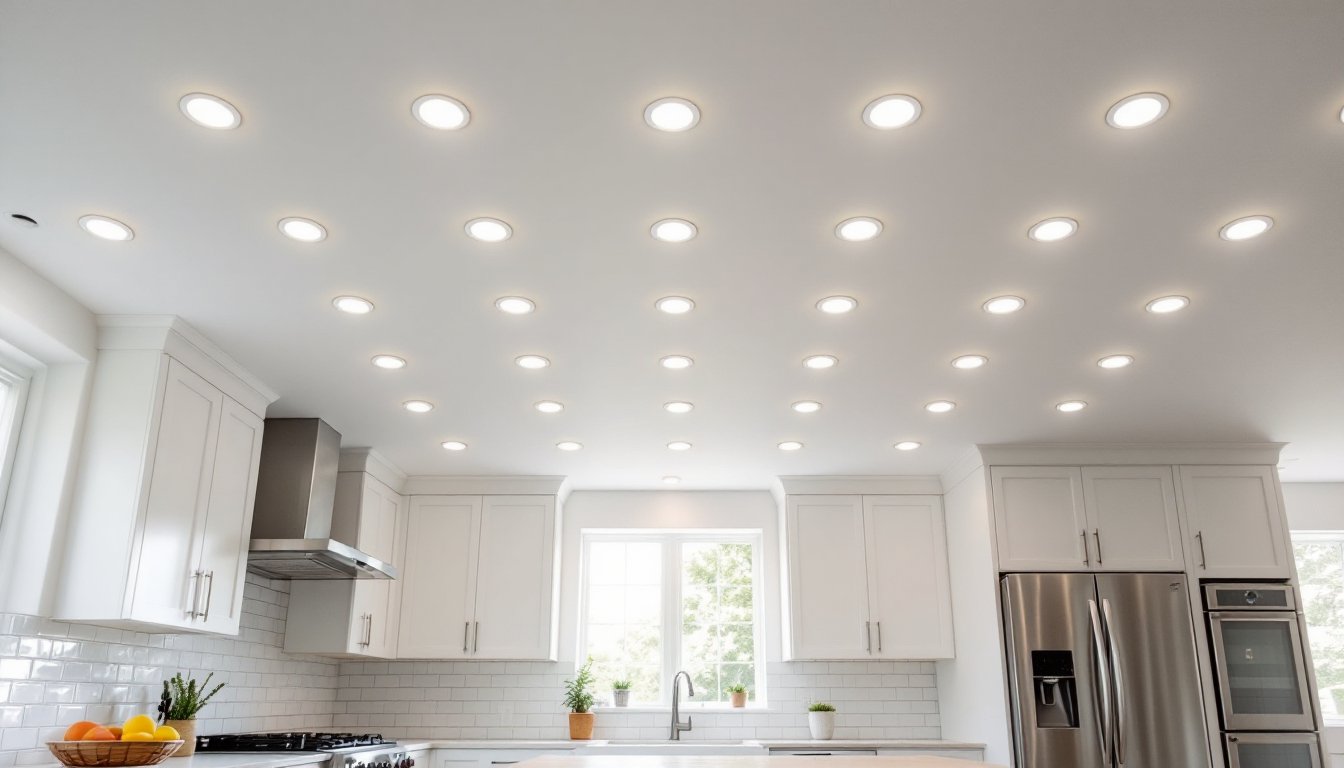
Recessed lighting has long been a staple in modern homes, but traditional can fixtures can feel dated and bulky, especially in renovations where ceiling space is tight or you’re working around existing infrastructure. Halo canless recessed lighting offers a sleek alternative that eliminates the old-school housing can entirely, creating a minimal look while delivering the same reliable illumination. Whether you’re upgrading a kitchen, brightening a basement, or finishing a new ceiling, these fixtures deliver modern aesthetics without compromising on function. This guide walks you through what they are, how to install them, and how to choose the right setup for your space.
Table of Contents
ToggleKey Takeaways
- Halo canless recessed lighting eliminates bulky metal housings for a sleek, modern look that works in shallow ceilings, retrofits, and minimalist designs without sacrificing illumination.
- Canless fixtures are highly energy-efficient, consuming only 8–12 watts compared to 40–60 watts for older halogen setups, resulting in lower power bills and LED modules lasting 25,000–50,000+ hours.
- DIY installation is achievable for retrofits and new construction if you’re comfortable with basic electrical work, though new circuits and significant ceiling alterations require a licensed electrician and local permits.
- Proper sizing depends on lumens (500–1,200 range), color temperature (2700K for warm, 4000K for task lighting), and spacing 4–6 feet apart, with damp-rated fixtures essential for bathrooms and kitchens.
- Maintenance is minimal—wipe lenses every 6–12 months—but dimming issues often arise with non-LED-compatible dimmers, solvable by upgrading to LED-specific dimmer models or modules.
What Is Halo Canless Recessed Lighting?
Canless recessed lighting, like Halo’s offerings, strips away the traditional metal housing (the “can”) that sits inside your ceiling cavity. Instead, a compact fixture mounts directly into drywall or plaster with just the trim ring visible from below. The LED module, transformer, and wiring are contained within a much smaller footprint, often just 4 to 6 inches deep, making them ideal for shallow ceiling cavities, cathedral ceilings, or retrofit situations where you can’t fit standard recessed cans.
These fixtures sit flush against your ceiling surface, creating a nearly invisible installation that looks intentional and modern rather than purely functional. You’ll often see them in minimalist kitchens, commercial spaces, and high-end residential projects. The Halo brand is known for reliability and offering both LED and smart options, though the general canless concept is now available from multiple manufacturers. LED canless fixtures produce minimal heat, run cool to the touch, and last 25,000 to 50,000 hours or more, meaning you won’t be climbing a ladder every few years.
Key Benefits for Homeowners
The main draw is aesthetics. A canless fixture disappears visually once it’s installed, there’s no bulky shadow or dark rim, just clean ceiling. That makes it perfect for rooms where you want light to feel ambient rather than architectural. They’re also energy-efficient: LED canless fixtures draw 8–12 watts on average versus 40–60 watts for older halogen recessed setups, so your power bills shrink noticeably over time.
Flexibility is another win. Because the fixture itself takes up minimal ceiling depth, you can install them in spaces where traditional cans won’t fit: shallow ceiling joists, areas near roof rafters, or above finished ceilings in kitchens and bathrooms. Retrofit kits exist too, allowing you to swap out old cans for canless alternatives without rewiring, a major advantage if you’re not comfortable running new electrical circuits.
Maintenance is low-impact. Most canless LED fixtures are damp-rated or fully sealed, making them suitable for bathrooms and kitchens where moisture is a concern. Since there’s no internal can to accumulate dust or trap heat, they stay cleaner and safer to operate in enclosed spaces.
Installation Basics for DIY Projects
Installation difficulty depends on whether you’re working with new construction (easiest) or retrofitting existing cans (moderate). Both are doable for a confident DIYer, but know upfront: if you’re adding new circuits or significantly altering your ceiling structure, you’ll likely need a licensed electrician. Most jurisdictions require a permit for new electrical work, even lighting.
For retrofit installations, you’re replacing existing recessed can fixtures. Turn off power at the breaker, use a non-contact voltage tester to confirm the circuit is dead. Remove the old trim, lens, and internal trim ring from the existing can. Disconnect the junction box and old fixture wiring. Install the new canless fixture’s mounting bracket into the existing can opening, then feed the wiring harness into the junction box and connect it using wire nuts rated for LED (standard copper twist connectors work, but LED-rated connectors ensure secure contact). Screw the trim ring in place, insert the lens or diffuser, and test before closing up the ceiling.
For new construction, the process is cleaner: mark your fixture locations on the ceiling layout, cut holes using a drywall saw, typically 4-inch or 6-inch diameter depending on the fixture, slide the mounting bracket into the opening, secure it to the drywall with the supplied fasteners, run your electrical cable to a nearby junction box or home run, connect the wiring inside the fixture’s terminal block, and snap the trim ring and lens into place. Most canless fixtures use a standard junction box connection, so integrating them into a three-way switch circuit or a dimmer is straightforward.
Tools and Materials You’ll Need
Tools:
• Non-contact voltage tester (essential for safety)
• Drywall saw or hole saw (4-inch or 6-inch, depending on fixture)
• Wire strippers
• Wire nuts (or LED-rated connector blocks)
• Screwdrivers (flathead and Phillips)
• Ladder or ceiling access
• Flashlight or headlamp
• Tape measure
Materials:
• Canless recessed fixture kit(s) – Halo brand or equivalent
• 14/2 or 12/2 electrical cable (consult your fixture documentation and local code)
• Wire nuts or connector blocks rated for LED
• Drywall patch compound (if you’re removing old cans and patching holes)
• Trim rings and lenses (often included with the fixture)
Before you start, read your fixture’s installation manual in full. Halo publishes detailed diagrams, and following them prevents common miswiring and code violations.
Choosing the Right Size and Wattage
Canless fixtures come in standard sizes, usually 4-inch or 6-inch diameter openings, with some models offering 3-inch ultra-compact versions for tight spaces. Measure your ceiling cavity depth and confirm your fixture’s depth rating. Most canless units are 4 to 6 inches deep, but if you’re in a shallow ceiling or working around joists, verify before buying.
Wattage and lumens are the second consideration. Canless LED fixtures typically range from 500 to 1,200 lumens. A 500-lumen fixture suits accent or ambient lighting in bedrooms: 800–1,000 lumens work well for task lighting in kitchens and bathrooms: 1,200+ lumens are for general illumination in larger rooms. Unlike incandescent wattages (which you can’t compare to LED directly), lumens are the apples-to-apples metric. Check your fixture’s lumen output, then calculate total room lumens by multiplying the number of fixtures by their lumen rating. A practical rule: 30–50 lumens per square foot for general lighting, 75+ for task areas.
Color temperature matters too. 2700K (warm white) mimics incandescent and suits living areas: 3000K (soft white) is neutral and works in most rooms: 4000K (cool white) is brighter and often chosen for kitchens and work zones. Many modern Halo fixtures are dimmable, and some offer smart home integration. Dimming capability adds cost but lets you adjust mood and energy use, worth the investment if you’re controlling multiple fixtures. Confirm dimmer compatibility before purchase: not all LED canless fixtures play nicely with older or standard dimmers.
Design and Style Considerations
Beyond practical specs, think about finish and appearance. Halo and other canless manufacturers offer matte white, brushed nickel, oil-rubbed bronze, and black trim rings. Matte white is virtually invisible against most ceilings: metallic finishes add a subtle design touch and pair well with modern or industrial décor. Choose finishes that complement your ceiling color and room aesthetic.
Spacing is equally important. Canless fixtures are often clustered in grids or rows for even illumination. A common rule is to space them 4 to 6 feet apart for ambient lighting, closer for accent or task lighting. If you’re removing an old chandelier or pendant fixture, canless recessed lighting offers a clean alternative without sacrificing brightness. In open-concept kitchens, combining canless recessed with a statement pendant or two creates visual interest and zoning. In home offices or basements, a uniform grid of canless fixtures provides flicker-free, flatter light that reduces eye strain, compare this approach with renovation tutorials and remodeling guides to see how layered lighting transforms spaces.
Consider moisture and finish requirements: in bathrooms and kitchens, opt for damp-rated fixtures with sealed junction boxes. Mold and corrosion won’t be concerns, and the fixture handles steam without degradation. In dry areas like bedrooms and living rooms, standard canless fixtures suffice.
Maintenance and Troubleshooting Tips
Canless fixtures are low-maintenance. The biggest threat is dust accumulation on the lens. Every 6 to 12 months, turn off power and gently wipe the lens with a soft, dry cloth to preserve clarity and light output. Avoid liquid cleaners on LED fixtures: they can seep into the electronics.
If a fixture stops working, first confirm the circuit is on and the breaker hasn’t tripped. Use a non-contact voltage tester on the fixture’s trim to verify power is reaching it. If power is present but no light, the LED module or internal driver is likely dead, most manufacturers offer 3 to 5-year warranties, and replacement modules are straightforward to swap if the fixture is still under coverage.
Dimming issues are common. Many older dimmers were designed for incandescent bulbs and don’t play well with LEDs. If a canless fixture flickers or won’t dim smoothly, either replace the dimmer with an LED-compatible model or install a standalone LED dimmer module in the fixture’s junction box. Halo and competitors sell dimmer-compatible kits: check compatibility lists before assuming a standard dimmer will work.
If you’re retrofitting and notice flickering across multiple fixtures, a loose wire connection is the culprit. Turn off power, open the junction boxes, and reseat all wire nut connections by twisting them snugly, about a quarter turn after they’re hand-tight. The DIY community often discusses retrofit challenges in forums: discussions around LED recessed retrofit downlight kits provide real-world troubleshooting from experienced installers.
Finally, check your fixture’s manual for ballast or driver lifespan. While LEDs themselves last decades, the internal driver that regulates power can fail. Quality Halo fixtures have robust drivers rated for 50,000+ hours: budget brands sometimes cut corners here, so factor lifespan into your purchase decision.