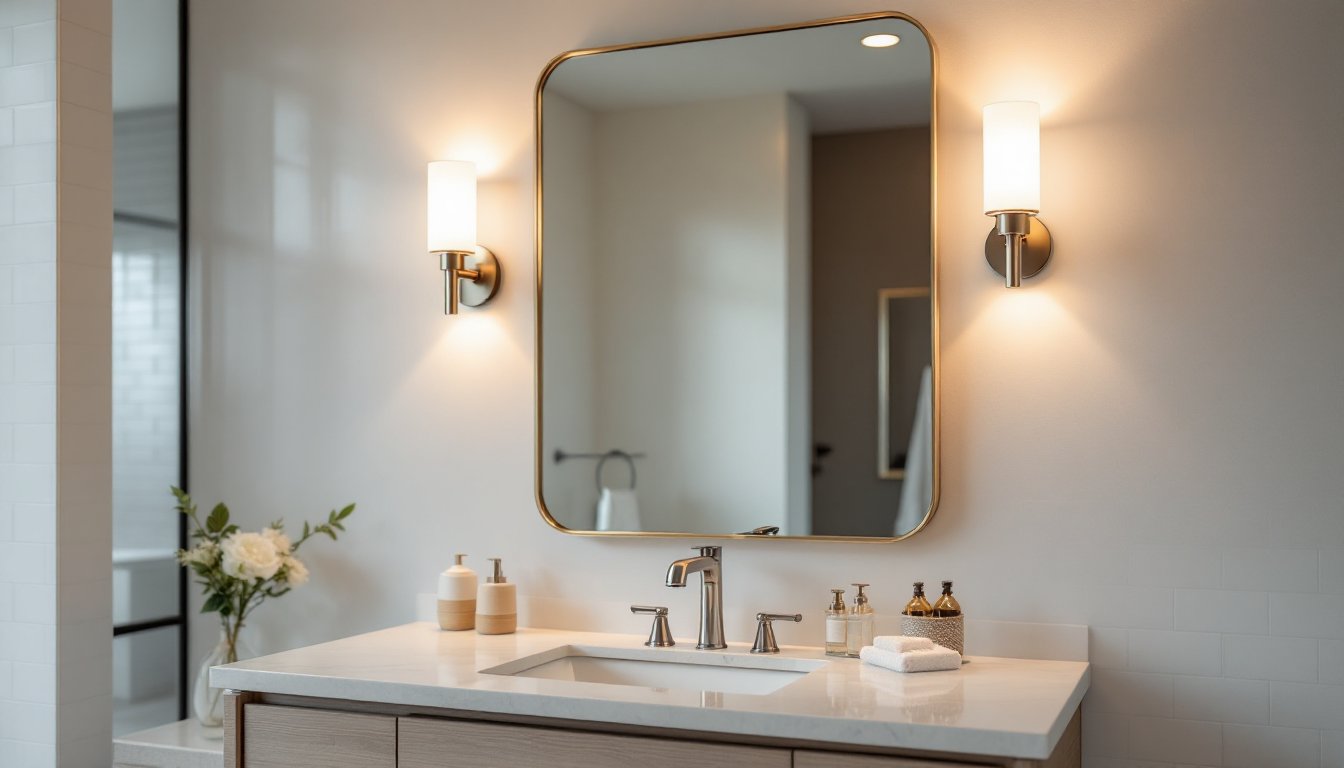
Good bathroom lighting doesn’t just happen, it’s planned. Most homeowners overlook vanity lighting until they’re squinting in the mirror or casting harsh shadows during their morning routine. Bathroom vanity lighting serves a dual purpose: it’s functional task lighting that lets you shave, apply makeup, or see what you’re doing, and it’s a design element that sets the mood of the entire bathroom. The right fixtures eliminate shadows on your face, provide adequate illumination for grooming tasks, and complement your bathroom’s style. Whether you’re renovating from scratch or upgrading outdated fixtures, understanding your options makes the difference between a vanity that works and one that looks great while actually working.
Table of Contents
ToggleKey Takeaways
- Flanking sconces positioned 36–40 inches apart at eye level (60–66 inches from the floor) are the gold standard for bathroom vanity lighting, eliminating unflattering shadows and providing even face illumination.
- Choose a color temperature of 3000K–4000K with a CRI of 90 or higher to ensure accurate color rendering for grooming tasks like makeup application and shaving.
- A standard 36-inch vanity mirror requires 2,500–3,000 total lumens from all fixtures combined, equivalent to roughly 60–75-watt LED bulbs per sconce.
- Layer bathroom vanity lighting with sconces for task lighting, overhead ambient light, and optional accent lighting, all controlled by dimmers for flexible mood and functionality.
- GFCI protection is required by electrical code for all bathroom vanity lights within 6 feet of a sink to prevent electrocution—hire a licensed electrician if you’re unfamiliar with hardwiring.
- Moisture-rated fixtures (IP44 or higher) made from brass, stainless steel, or other humidity-resistant materials, paired with proper ventilation, ensure your vanity lights last in steamy bathroom environments.
Why Bathroom Vanity Lighting Matters
Poor vanity lighting is a hidden culprit behind botched shaving, uneven makeup application, and bathroom photos that look nothing like reality. The bathroom is one of the few spaces where you face a mirror under bright light multiple times daily, the lighting has to earn its keep.
Task lighting around the vanity serves a specific job: illuminate your face and the mirror surface evenly without creating shadows. This means light needs to come from multiple angles, not just overhead. A single ceiling fixture leaves your eyes in shadow, a problem that becomes obvious when you’re applying eyeliner or trimming facial hair.
Beyond function, vanity lighting affects the entire bathroom’s atmosphere. The color temperature (warm vs. cool light) influences whether your space feels spa-like and relaxing or clinical and sterile. Dimmers let you adjust intensity for different times of day. Well-placed sconces flanking the mirror have become a design standard for good reason, they work. When you’re planning a bathroom overhaul, lighting deserves the same attention as tile, paint, and fixtures.
Types Of Bathroom Vanity Lighting Fixtures
Sconces And Wall-Mounted Lights
Sconces mounted on either side of the mirror are the gold standard for bathroom vanity lighting. They cast light across your face at roughly eye level, eliminating the unflattering shadows that overhead fixtures create. A pair of 4-inch to 6-inch wide sconces positioned 36 to 40 inches apart (measured from center to center) works for most vanities. The height should place the light source roughly at or slightly above eye level, typically 60 to 66 inches from the floor.
Wall sconces come in countless styles: modern minimalist, industrial, traditional, mid-century. Material choices include brushed nickel, oil-rubbed bronze, brass, and glass. When shopping, prioritize even light distribution over decorative flair. A frosted or opal glass shade diffuses light more evenly than clear glass, which can create hot spots.
Another wall-mounted option is the vanity light bar, a single fixture that spans the width of the mirror. These work well for narrow vanities (under 30 inches) where spacing two sconces becomes impractical. But, they don’t perform as well as flanking sconces for shadow elimination, so they’re best paired with overhead ambient lighting.
Overhead And Ceiling-Mounted Options
Ceiling fixtures alone shouldn’t be your primary vanity light, but they’re valuable as secondary ambient lighting. A centered overhead fixture provides general illumination and prevents the bathroom from feeling like a theatrical dressing room at night. Recessed lights in the ceiling work, though they cast shadows unless you have three or more fixtures positioned across the vanity area.
Consider ceiling lighting options when planning your overall bathroom scheme. If your bathroom has a low ceiling (under 8 feet), flush-mount fixtures sit closer to the surface and avoid that “boxing you in” feeling. Surface-mounted fixtures can work in larger bathrooms but may look bulky in tight spaces.
Combo approaches are common in modern bathrooms: sconces for task lighting, a ceiling fixture for ambient light, and sometimes a small spotlight above or behind the mirror for accent. This layered approach gives you flexibility with dimmer switches to adjust the mood.
Key Factors To Consider When Selecting Vanity Lights
Color Temperature and CRI Matter More Than You’d Think
Light color temperature is measured in Kelvin (K). Bathroom vanities typically call for 3000K to 4000K, the range that feels natural without being too yellow or too harsh blue. At 3000K (soft white), you get a warm, flattering light: at 4000K (cool white), the light is brighter and more clinical. Many people choose 4000K for the vanity because it reveals true colors and mimics natural daylight. Test a fixture in your space before committing if possible: what looks good at the showroom might feel wrong under your ceiling color.
Color Rendering Index (CRI) measures how accurately a light source shows colors. A CRI of 90 or higher is ideal for bathrooms. This matters if you’re applying makeup, matching clothing, or assessing your skin. LED bulbs vary wildly in CRI, so read the packaging.
Brightness and Wattage
Bathroom vanities need adequate brightness without glare. Most lighting designers recommend 75–100 lumens per square foot of mirror surface. For a standard 36-inch vanity mirror, you’re looking at roughly 2,500–3,000 total lumens from all fixtures combined. A pair of sconces with 60–75-watt equivalent LED bulbs is a good starting point.
Watts don’t directly correlate to brightness anymore (thank LEDs), so check lumen output on the package. A 60-watt incandescent bulb produces about 800 lumens: the LED equivalent might be 9–10 watts but deliver the same lumens.
Electrical and Code Considerations
Bathroom lighting must meet electrical code. In the US, the National Electrical Code (NEC) requires GFCI (ground-fault circuit interrupter) protection for all bathroom receptacles and lights within 6 feet of a sink. This isn’t something to bypass, GFCI protection prevents electrocution. If you’re replacing a fixture, make sure the circuit is GFCI-protected.
Some vanity lights come pre-wired: others require hard-wiring to existing circuits. Hardwiring typically means cutting power at the breaker, running new wire, and making connections inside a junction box. If you’re uncomfortable with electrical work, hire a licensed electrician. A bathroom renovation is not the place to experiment.
Moisture and Ventilation
Bathrooms get steamy. Your vanity light fixture should have a moisture rating suitable for bathrooms. Look for IP44 or higher on the product specs (IP stands for Ingress Protection). This indicates the fixture resists splashing and humidity. Brass and stainless steel fixtures hold up better than bare aluminum in moist environments.
Proper ventilation matters too. A bathroom exhaust fan running during and 20 minutes after showers reduces humidity and prolongs fixture life. If your bathroom lacks ventilation, a moisture-rated fixture becomes even more critical.
Size and Proportion
Your light fixtures should be proportional to the vanity and bathroom size. A tiny sconce looks lost above a 60-inch vanity: an oversized fixture overwhelms a small powder room. A common rule: fixtures should be roughly one-third the width of the mirror. A 36-inch mirror pairs well with sconces that are 12 inches wide or so. Don’t obsess over this ratio, it’s a guideline, not a rule.
When shopping at kitchen lighting retailers, you’ll notice bathroom and kitchen fixtures share similar styles and quality standards. The difference lies in moisture ratings and size proportions.
Installation And Placement Best Practices
Placement for Optimal Lighting
The classic setup places sconces 36–40 inches apart (center to center) on either side of the mirror. For a 30-inch mirror, this puts sconces roughly 3 inches from the mirror’s edge. If your vanity is narrower, adjust inward but maintain at least 1 inch of clearance from the mirror frame.
Height is critical: the center of each sconce should be at or slightly above eye level, typically 60–66 inches from the floor. If you’re taller or shorter than average, adjust accordingly. Stand where you’d normally use the mirror and imagine light at eye level, that’s where it belongs. Too low and the light creates shadows above your eyebrows: too high and you get harsh shadows under your eyes.
Before You Drill Holes
Use a stud finder and check behind the wall for plumbing and electrical runs. Many bathrooms have pipes running vertically behind the vanity for sinks and horizontal runs for vent stacks. Drill into these and you’ve created a much bigger problem than a crooked light. If you’re uncertain, call a plumber or electrician to locate lines before you start.
Mark sconce locations with painter’s tape, step back, and verify they look level and symmetrical. A laser level or straightedge helps here, trust tools over your eye.
Hardwiring vs. Plug-In Options
Most bathroom vanity lights are hardwired to ceiling circuits, which requires turning off power at the breaker, fishing wire through walls, and making connections. If you’ve done basic electrical work before, you might manage this. If not, hire an electrician. Typical cost ranges from $200–$400 for a two-sconce installation, including labor.
Some vanity lights now come with plug-in cords, offering a middle ground. You’ll need an outlet near the fixtures, which might mean adding an outlet if one doesn’t exist. This approach is cleaner for renters but less common in permanent installations.
Dimmer Installation
A dimmer switch lets you adjust light intensity, which is especially useful in bathrooms. Not all LED bulbs work with all dimmers, check compatibility before buying. Many quality LED bulbs are now “dimmer-friendly,” but older dimmer switches sometimes flicker with LEDs. If you’re installing a new dimmer, a modern LED-compatible dimmer switch costs $15–$30 and ensures smooth operation.
For professional advice on planning a full bathroom lighting layout, design resources like Remodelista offer curated inspiration and practical guidance. You can also find expert renovation tips at Bob Vila for detailed step-by-step lighting installation guides.
If you’re tackling plumbing or ventilation as part of your bathroom upgrade, coordinate with your lighting plan so fixtures don’t interfere with ductwork or water lines.
Conclusion
Bathroom vanity lighting isn’t an afterthought, it’s foundational to a bathroom that actually works. Start with flanking sconces sized appropriately to your mirror and positioned at eye level. Layer in overhead ambient light and consider dimmer controls for flexibility. Pay attention to color temperature and moisture ratings, and don’t skip the electrical code requirements. Proper planning here saves you from squinting, shadows, and regret.