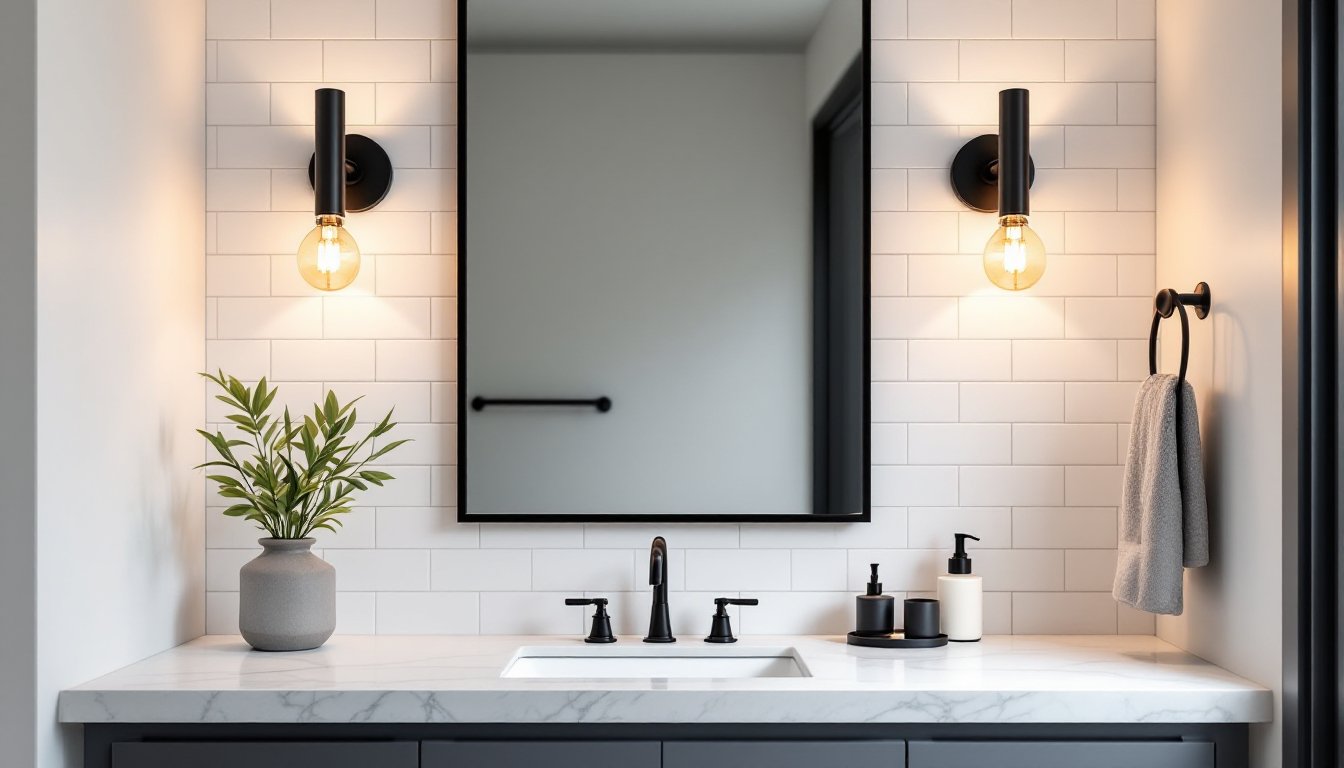
Black bathroom vanity lighting has become the go-to choice for homeowners looking to add contemporary flair and visual contrast to their bathrooms. Unlike chrome or brushed nickel fixtures that blend into the background, black vanity lights make a design statement while providing functional task lighting right where you need it most. Whether you’re renovating a dated bathroom or building out a new one, black fixtures pair well with nearly every color palette, from spa-like neutrals to bold jewel tones. This guide walks you through the types of black bathroom vanity lighting available, installation considerations, and how to integrate them seamlessly with your overall design. The key is understanding which style fits your space and how to install it properly for both safety and visual impact.
Table of Contents
ToggleKey Takeaways
- Black bathroom vanity lighting creates contemporary design contrast while providing practical task lighting, and matte black finishes hide dust and water spots better than glossy alternatives.
- Wall sconces positioned 36–40 inches apart at eye level (60–66 inches from the floor) deliver even, shadow-free illumination, making them the gold standard for functional black vanity lighting.
- All bathroom fixtures within 3 feet of a sink must be on a GFCI-protected circuit per the National Electrical Code, regardless of finish color or style.
- Always turn off power at the breaker panel and use a voltage tester before installation; improper electrical connections in bathrooms can void insurance and create fire hazards.
- Pair black vanity lighting with 2–3 coordinated metal finishes and warm 3000K bulbs to create a cohesive, intentional design that works with nearly any color palette, from neutrals to bold jewel tones.
- Proper mounting into wall studs or heavy-duty anchors is essential—never rely on adhesive alone in bathrooms, as humidity and vibration can cause mounts to fail.
Why Black Vanity Lighting Works for Modern Bathrooms
Black fixtures serve a dual purpose: they ground a bathroom design and create crisp visual separation on your mirror or wall. Unlike brushed brass or polished chrome, black doesn’t show fingerprints or water spots as readily, which is a practical win in a high-moisture environment. Matte black finishes tend to hide dust better than satin or glossy versions, keeping your fixtures looking fresh longer.
The contrast is also psychological. A black frame around your mirror or flanking your sink draws the eye and makes the vanity area feel intentional and designed, not just functional. This works whether your aesthetic leans minimalist, industrial, or traditional with modern touches. Black pairs equally well with white subway tile, terrazzo, marble, or even bold paint colors, it’s a design neutral in a way that bright chrome isn’t.
From a code and safety standpoint, black vanity lighting must still meet the same electrical and waterproofing requirements as any other bathroom fixture. The National Electrical Code (NEC) requires any light fixture within 3 feet horizontally of a sink to be on a GFCI-protected circuit. This applies regardless of finish color.
Types of Black Bathroom Vanity Lights to Consider
Wall Sconces and Vanity Strips
Wall sconces are individual fixtures mounted on either side of your mirror, typically 36 to 40 inches apart and positioned at eye level (roughly 60 to 66 inches from the floor). They deliver even light across your face without casting harsh shadows, which is why stylists and makeup artists favor this setup. A pair of sconces flanking a mirror is the gold standard for functional vanity lighting.
Vanity strips (also called light bars or vanity bars) are linear fixtures mounted directly above the mirror or integrated into the mirror frame itself. They work well in smaller bathrooms where wall space is limited or when you want a sleek, contemporary look. Black vanity strips in aluminum or steel housings give a clean-lined appearance and are often easier to install than multiple individual sconces.
Both options come in a range of wattages and color temperatures. A key spec to look for is 3000K color temperature (warm white), which is flattering for morning and evening routines. Many fixture manufacturers offer 60-watt or 75-watt bulb equivalents in LED, which uses less energy than incandescent or CFL and runs cooler, important in a space with moisture and heat from showers.
Overhead and Pendant Options
Pendant lights are single or clustered hanging fixtures suspended from the ceiling, often positioned above or slightly behind your vanity. They add visual interest and can make a small bathroom feel taller. Black pendant fixtures in geometric shapes, cylindrical, geometric, or bell-shaped, are on-trend and photograph well, which appeals to homeowners considering resale value.
Overhead ceiling-mounted fixtures are the traditional approach: a single flush-mount or semi-flush black fixture centered over the sink. They’re straightforward to install in most cases and provide ambient light plus to task lighting. The downside is that overhead lights alone can cast shadows under the eyes and chin, so many designers recommend combining them with wall sconces.
When selecting overhead options, confirm that your ceiling height and electrical rough-in location allow safe installation. Most bathroom ceilings are 8 feet: installing a pendant 7 feet from the floor is workable. If you’re converting an existing overhead fixture location, you’ll likely reuse the existing junction box, which simplifies the work.
Installation Tips for Black Vanity Lighting
Before you start, kill the power to the circuit at your breaker panel and confirm it’s off with a non-contact voltage tester. This is non-negotiable. Bathrooms are wet environments, and electricity and water are an unsafe combination if you’re not careful.
Measure twice, mark once. For wall sconces, locate your mirror studs if the mirror is hung on drywall, and plan to mount the fixture directly into a stud or use heavy-duty anchors rated for the fixture weight. Sconces are typically 36 to 42 inches from the mirror’s center and positioned at eye level. Use a level and a simple stud finder to avoid costly mistakes. If you’re repositioning a fixture from chrome to black, you may need to drill new holes, which means patching old ones and repainting, budget time for this.
For vanity strips mounted directly above mirrors, the bracket spacing and the mounting surface matter. Drywall, tile, or mirror framing each require different hardware. Tile requires a masonry bit and an appropriately rated anchor: drywall prefers a stud or a heavy-duty toggle bolt. Never rely on just adhesive: bathroom vibration and humidity can cause adhesive-only mounts to fail.
Electrical connections follow standard wiring practices: black (hot) to black, white (neutral) to white, and bare copper or green (ground) to ground. Use wire nuts rated for your wire gauge (usually 14 or 12 AWG in residential bathrooms) and wrap them with electrical tape for extra security. Secure the fixture to its mounting bracket per the manufacturer’s instructions: a loose fixture is unsafe and looks sloppy.
Wear safety glasses and gloves when handling electrical components, and keep the space dry. If you’re uncomfortable working with electricity, hire a licensed electrician: code violations or improper connections can void insurance or create fire hazards. Installation typically costs $100 to $300 per fixture when contracted, a worthwhile investment if you’re unsure.
One frequently overlooked detail: ensure your new fixture doesn’t clash with your existing outlet placement. If the vanity strip or sconce wiring path requires running new conduit or surface-mounted wiring, factor that into your plan and aesthetic. Surface-mounted black conduit can look intentional and industrial: buried conduit requires drywall work.
Pairing Black Lighting With Your Bathroom Design
Black vanity lighting shines when paired with intentional color and material choices. Designers frequently pair black fixtures with kitchen lighting aesthetics, where black hardware and fixtures create a cohesive look throughout the home. In the bathroom, apply the same principle: if your cabinet hardware, faucet, or towel bars are black, your vanity lighting should match the finish for visual flow.
Matte black is the most forgiving finish. It reads “modern” without feeling stark, and it camouflages imperfections better than polished black. If you prefer a warmer modern look, consider black with a brushed texture or oil-rubbed bronze accents. Paired with white marble, white subway tile, or soft gray paint, black fixtures feel balanced and intentional.
For color, white and gray bathrooms are the safest canvas, but black vanity lighting also works with pale green, dusty blue, or even muted blush tones. Bold colors like navy or forest green pair beautifully with black for a dramatic, spa-like effect. Avoid pairing black fixtures with chrome or brushed nickel accessories: the mixed finishes look scattered. Cohesion comes from limiting your finishes to 2 or 3 metals in the space.
Lighting design resources like Remodelista and House Beautiful regularly feature black-fixture bathrooms paired with specific paint colors and tile choices, which can guide your aesthetic. Similarly, bathroom accessory guides emphasize the role of statement lighting in anchoring a room’s overall design. Pay attention to the quality of light, too: a black fixture with a warm 3000K bulb feels inviting, while a cool 4000K or 5000K bulb can feel clinical. Test a sample bulb in your fixture before committing to a warm or cool palette throughout the bathroom.
Conclusion
Black bathroom vanity lighting is an investment in both function and design. Whether you choose wall sconces for balanced task lighting, a vanity strip for a sleek contemporary look, or overhead pendants for visual drama, the key is selecting a fixture that fits your layout and wiring, installing it safely per electrical code, and pairing it with cohesive finishes and colors throughout the space. Take time with measurement and placement, a well-positioned pair of sconces or a centered vanity strip pays dividends in daily usability and resale appeal. When in doubt, consult a licensed electrician to ensure your installation meets local code and safety standards.