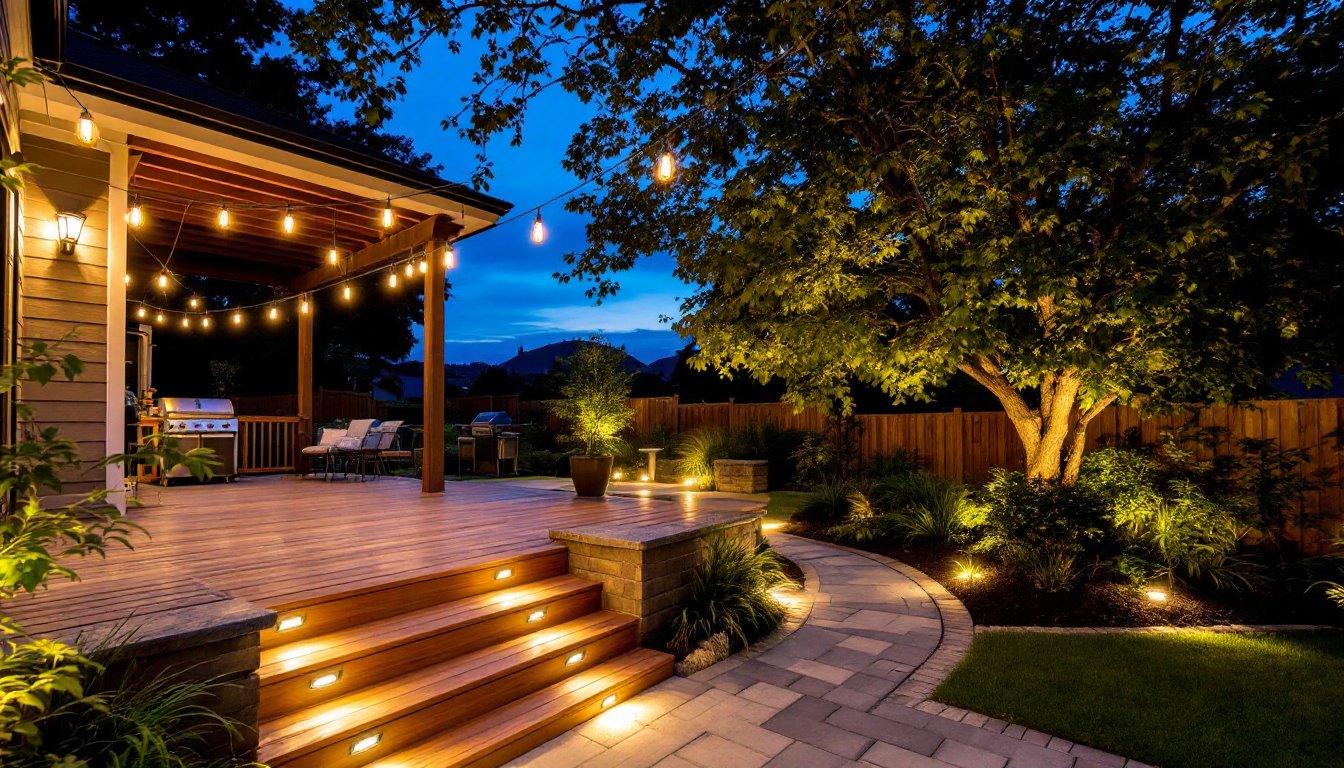
Outdoor lighting isn’t just about visibility, it’s about creating usable space, adding security, and transforming your yard into somewhere you actually want to spend time. Unlike indoor lighting, where you’re working in a controlled environment, outdoor fixtures face weather, temperature swings, and exposure that demand durability and thoughtful placement. Whether you’re lighting a pathway for safety, setting mood for entertaining, or simply extending your usable hours after dark, the right outdoor lighting choices make a tangible difference. This guide walks you through the types of fixtures available, the factors that matter most before installation, and the pros and cons of different light sources so you can make informed decisions for your specific yard.
Table of Contents
ToggleKey Takeaways
- Choose outdoor lighting types strategically: path and accent lights ensure safety and aesthetics, while ambient and task lights enable actual use of outdoor spaces like patios and decks.
- LED fixtures are the best choice for permanent outdoor installations, offering 75-85% less power consumption than incandescent bulbs, lasting 15,000-50,000+ hours, and reducing total cost of ownership over 5-10 years.
- Assess your yard layout at dusk to identify natural lighting needs, including entry points, stairs, and seating areas, then mark these spots to avoid buying fixtures that look great but don’t serve your space.
- Outdoor lighting fixtures must have IP65 ratings or higher for weather resistance, with coastal areas requiring stainless steel or marine-grade materials to prevent corrosion from salt water exposure.
- Solar lights work best for low-traffic decorative purposes in sunny climates with 6-8 hours of daily sunlight, not for security lighting or entry points where consistent, bright output is critical.
- Budget more per fixture for outdoor lighting than indoor equivalents due to durability requirements, but prioritize energy efficiency since outdoor fixtures run longer and LED bulbs deliver significant electricity savings over time.
Understanding Outdoor Lighting Types And Their Best Uses
Outdoor lighting falls into a few broad categories, each serving a different purpose. Knowing what you need helps you avoid buying fixtures that look great but don’t actually do the job.
Path And Accent Lighting For Everyday Navigation
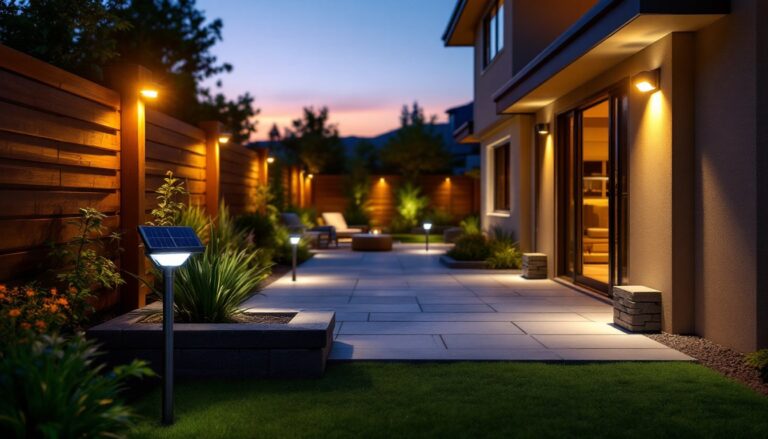
Path lights are the workhorses of outdoor lighting. These low-level fixtures, typically 12 to 24 inches tall, line walkways, driveways, and garden beds to guide foot traffic safely. They use modest wattage (usually 4 to 8 watts in LED versions) and don’t create glare, making them ideal for creating visual continuity without harsh shadows.
Accent lighting serves aesthetics and function in equal measure. Uplights placed at the base of trees, shrubs, or architectural features highlight texture and depth, turning a plain yard into something with dimension. Spotlights, mounted higher and angled downward, do similar work with more precision. These fixtures are often brighter than path lights and work best in strategic clusters rather than scattered randomly. LED Home Lighting Fixtures: outperforms traditional options here because they let you dial in intensity without wasting energy.
Step lights, recessed fixtures set into risers or treads, keep stairs navigable and add subtle, integrated lighting that feels less “added on.” They’re particularly useful on decks and outdoor stairs where stumbling risks are highest.
Ambient And Task Lighting For Entertaining Spaces
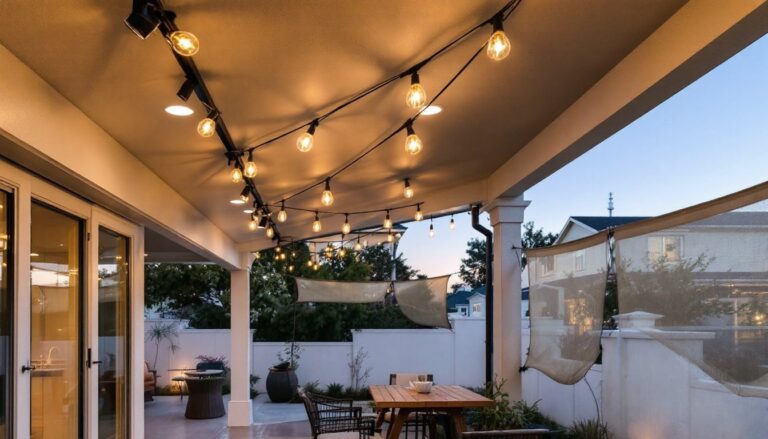
Ambient outdoor lighting creates the overall illumination level for a space. Porch lights, soffit lights, and hanging fixtures from pergolas or gazebos all fall here. These are what you turn on when you want to use your patio or deck for actual activities, grilling, conversation, games. Ambient fixtures typically draw more power (20 to 50+ watts) than path or accent lights because they cover larger areas. String lights and bistro lighting have become popular for ambient use because they’re festive, relatively affordable, and easy to install on most structures.
Task lighting focuses brightness on a specific function. Grill lights mounted above a cooking area, reading lights near seating, or deck lights positioned to illuminate stairs or entry points all qualify. The key difference from ambient lighting is precision, you’re directing light where it’s actually needed, not flooding an entire yard. This efficiency means you can use lower-wattage fixtures and still get adequate visibility.
How to Choose Outdoor digs deeper into fixture selection, but the basic principle is: path and accent lights serve safety and aesthetics, while ambient and task lights enable actual use of outdoor space. Mixing all four types gives you flexibility and layered visual interest rather than one-note illumination.
Key Factors To Consider Before Installing Outdoor Lights
Before you order fixtures, step back and evaluate what you’re actually trying to achieve. A few honest questions now save frustration and wasted spending later.
Assessing Your Yard Layout And Lighting Needs
Start by walking your property at dusk. Notice where you naturally want light, entry points, stairs, seating areas, and potential tripping hazards. Mark these spots mentally or literally with flags or stakes. Are you lighting a high-traffic zone that needs clear sightlines, or are you creating ambiance in a low-use corner? The answer changes fixture type and wattage.
Check sight lines from inside your home too. Some homeowners discover their outdoor lighting creates glare against windows or draws attention in ways they didn’t intend. If you have neighbors within close distance, consider how your fixtures might affect their space as well.
Think about scale. A postage-stamp patio doesn’t need three large overhead fixtures: a small number of well-placed accent or string lights will feel more intentional. A sprawling deck or large yard needs more coverage, and you’ll likely need multiple fixture types working together.
Consider seasonal changes. In winter, deciduous trees lose leaves and reveal sight lines and structures you might want to accent. In summer, dense foliage can block light you were counting on. Flexibility in fixture placement or adjustable angles (like on spotlights) helps you adapt.
Budget, Energy Efficiency, And Weather Resistance
Outdoor fixtures cost more than indoor equivalents because they must handle moisture, UV exposure, temperature swings, and corrosion. Expect to spend more per fixture for durability. A basic solar path light might run $15–30, while a quality LED deck light or wall sconce suitable for wet locations can easily run $40–150 each. Installation labor (if you’re hiring) adds to total cost, but many basic outdoor lights are DIY-friendly.
Energy efficiency matters more outdoors because fixtures run longer. LED bulbs draw 75–85% less power than incandescent equivalents and last 15,000 to 50,000+ hours compared to 1,000 hours for incandescent. That’s less frequent replacement, lower electricity bills, and less environmental impact. Halogen fixtures, once common, are losing ground to LEDs because they’re less efficient and run hot (a safety concern near landscaping).
Solar lights eliminate wiring and electricity costs but depend on sunlight hours and climate. In cloudy regions or northern latitudes, they underperform. They’re best for path and accent lighting where modest brightness is acceptable, not for task lighting where you need reliable, full output. Solar reliability has improved since 2020, but quality varies significantly, cheap solar path lights often fail within a season.
12 Volt LED Lighting covers low-voltage systems, which are excellent for outdoor use because they’re safer (no 120V shock risk), cheaper to run, and easier to install yourself without permits in most jurisdictions. Standard 120V outdoor circuits require either existing outlets with proper GFCI protection or new circuits run by a licensed electrician.
Weather resistance is non-negotiable. Look for fixtures rated IP65 or higher (Ingress Protection rating), this means they’re dust-tight and can handle water jets. Fixtures near salt water or in coastal areas should be stainless steel or marine-grade aluminum: standard painted metal corrodes quickly. Wiring and connectors must also be rated for outdoor use: regular extension cords and indoor-rated wire invite water infiltration and shorts.
Choosing Between Solar, LED, And Traditional Bulbs
Three main light sources dominate outdoor applications. Each has legitimate uses, but the math heavily favors LEDs for most situations.
Incandescent and halogen bulbs are fading fast. Incandescent fixtures draw significant power, fail frequently, and run hot, bad news in a wooden pergola or near shrubs. Halogen is brighter than incandescent but still inefficient and poses burn risk. If you have existing halogen fixtures, switching to LED bulbs (if compatible with your fixture) or replacing the fixture entirely with LED saves money immediately. Most incandescent and halogen outdoor lights manufactured now are discontinued or being phased out.
LED bulbs and fixtures are the default choice for new installations. They’re efficient, durable, and available in multiple color temperatures, warm white (2700K) for ambiance, cool white (4000K) for task lighting, and bright daylight (5000K+) for security. LEDs work in cold climates better than older technologies and don’t attract insects the way warm incandescent does. Cost per fixture is higher upfront, but total cost of ownership (purchase + electricity + replacement) favors LED over 5–10 years. Lighting Archives – Westoverhallhotel offers comparison articles if you want to dig deeper into fixture-specific reviews.
Solar lights are worthwhile for specific jobs: path lighting in sunny climates, accent lighting in gardens, and situations where you want zero wiring. They require direct sunlight for 6–8 hours daily to charge adequately. A solar path light with inadequate sun exposure becomes useless at night. Solar fixtures are best in USDA zones 6 and warmer: in colder climates, winter sunlight often isn’t enough to charge batteries fully. They’re also best for low-traffic or decorative purposes, path lights, garden accents, maybe string lights, not for security lighting or entry points where consistent, bright output is critical.
Smart LED fixtures (WiFi or Bluetooth-enabled, dimmable, color-changing) are growing in popularity and integrate with home automation systems. According to Digital Trends, smart outdoor lighting adoption is increasing as the technology becomes more affordable. These are excellent if you want to adjust brightness or color from your phone or automate schedules, but they cost more upfront and require reliable internet. For a basic outdoor lighting plan, standard LED fixtures are usually enough.
Practical takeaway: Go LED for all permanent installations and anything requiring reliable brightness. Use solar only where you can guarantee adequate sun and don’t need consistent output. Replace any remaining incandescent or halogen fixtures incrementally as budget allows. The energy and maintenance savings compound quickly, and you’ll spend less total money by going LED upfront rather than replacing fixtures twice in the time one quality LED setup lasts.